Choosing an aluminum door for your project is more than picking a good-looking style. You need a door that fits your space, traffic, design, and performance needs. This guide helps you understand the main aluminum door types and choose a solution that works in the real world.
What Are the Main Types of Aluminum Doors?
1. Aluminum Swing Door
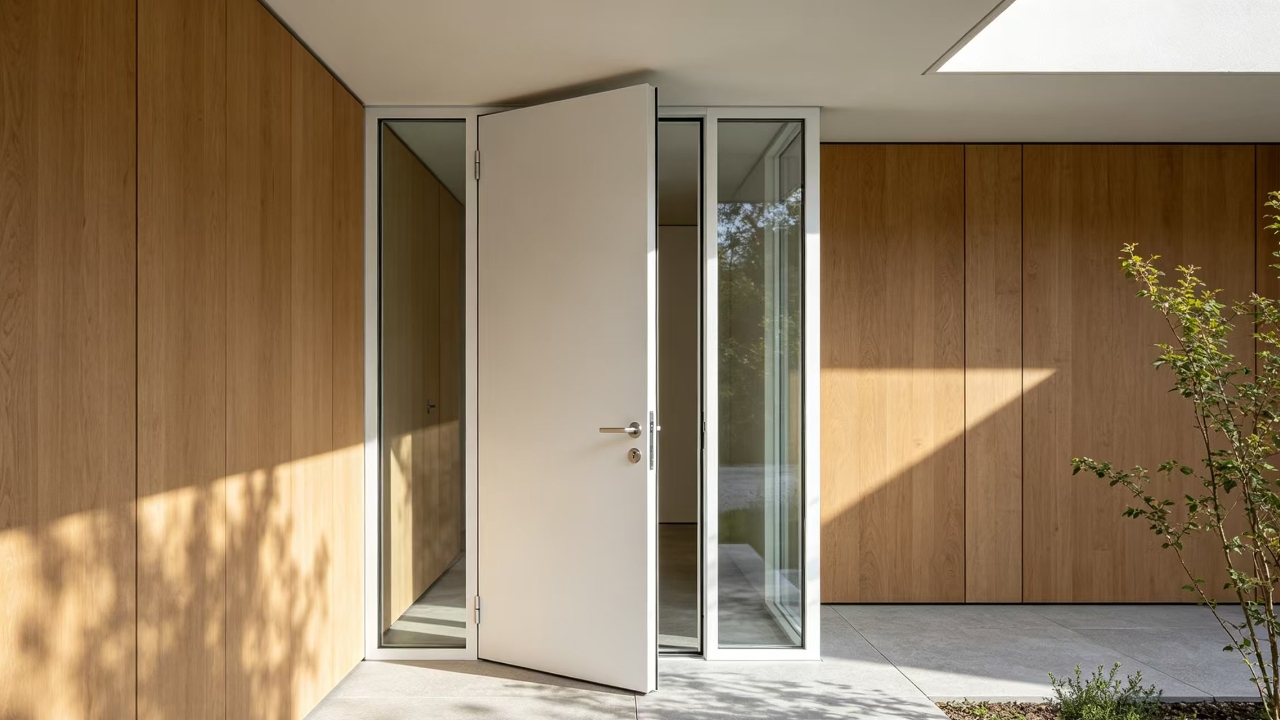
If your project needs a simple and direct access solution, a swing configuration is often a practical choice. An aluminum swing door opens inward or outward on hinges and can be configured as a single or double door according to the opening size and traffic requirements. It can also be combined with different glass options, locks, handles, hinges, and door closers. When sourcing for a construction project, you should pay attention to the door leaf size and hardware load capacity, especially when using large or heavy glass. For high-traffic commercial projects, you should also consider the durability of the hinges, locks, handles, and door closers to ensure smooth operation over long-term use.
2. Aluminum Sliding Door
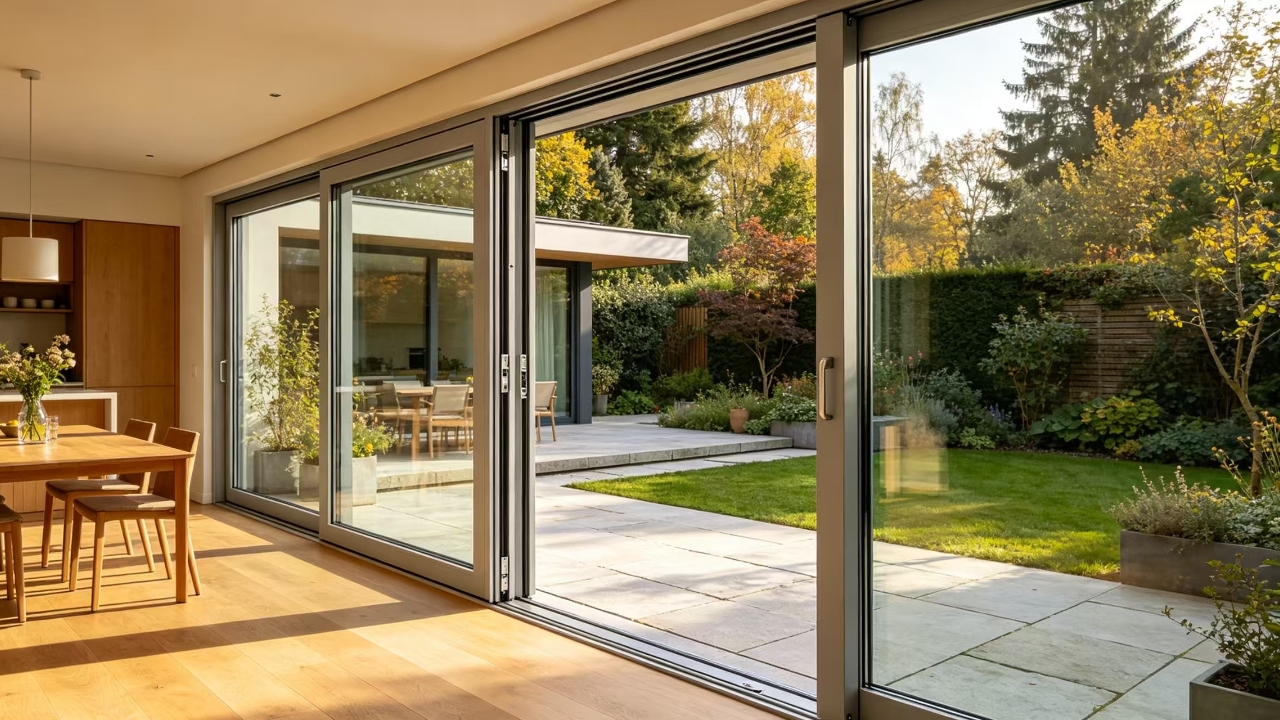
When your project has limited opening space or you want to reduce the floor area occupied by the door, a sliding configuration can provide a more practical solution. An aluminum sliding door moves horizontally along a track, so it does not require the same clearance as a swing door and can be combined with large glass panels to create a more open visual effect. When selecting this type of door, you should consider the track system, rollers, door panel weight, glass configuration, and sealing system together. Large glass panels can significantly increase the overall door weight, so the rollers and tracks need to have sufficient load capacity for the actual panel weight to ensure stable and smooth operation.
3. Aluminum Bifold Door
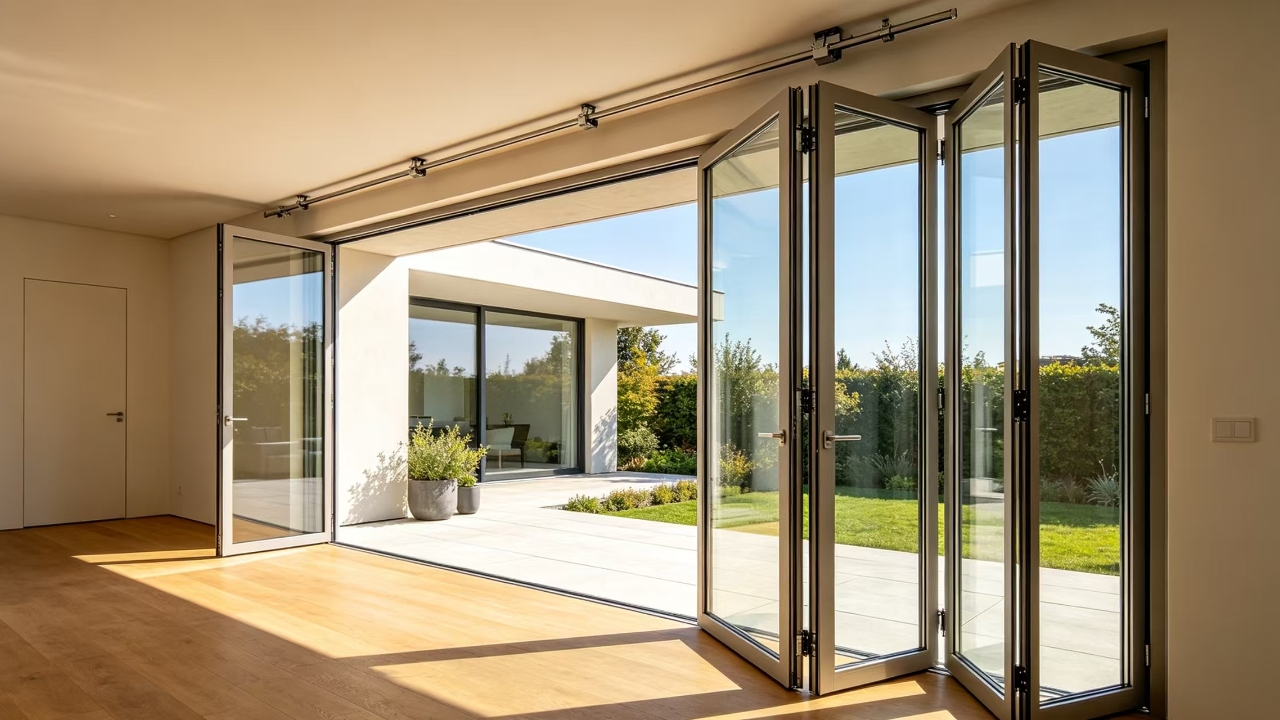
If your project requires a large opening while avoiding the excessive space required by traditional swing doors, a folding configuration can provide a more flexible solution. Multiple door panels are connected with hardware and fold together when opened, making an aluminum bifold door suitable for large architectural openings and projects that require a stronger connection between different spaces. The number and size of panels, folding direction, glass weight, track structure, and hinge load capacity all need to be considered together. For project purchasing, it is recommended that you provide the opening dimensions and expected configuration in advance so the supplier can match the door system to your actual requirements.
4. Aluminum Garage Door
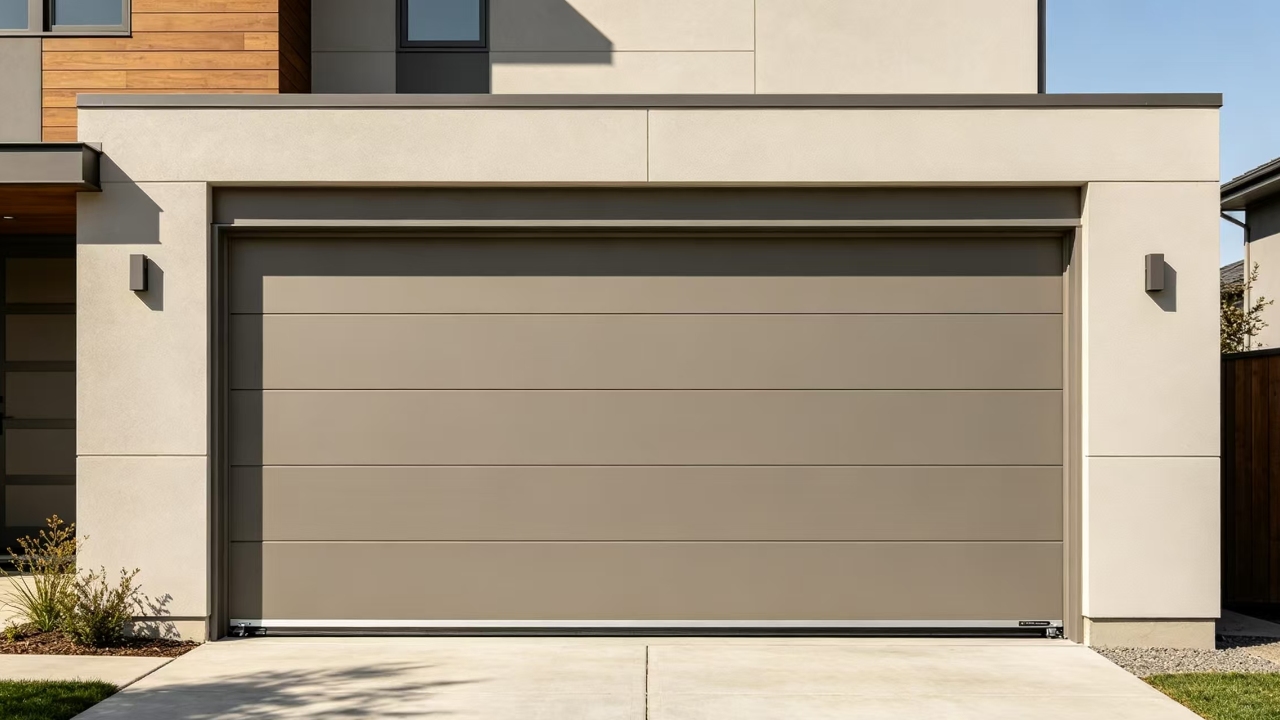
For vehicle access and large openings, the door structure and opening method are usually more important than they are for standard pedestrian doors. Aluminum offers a relatively lightweight structure, good corrosion resistance, and a clean appearance, making an aluminum garage door suitable for residential garages, commercial parking areas, workshops, storage spaces, and utility buildings. When sourcing this type of door, you should first determine the opening dimensions and suitable operating method, then consider manual or automatic operation, panel construction, lifting mechanisms, glass or solid panel requirements, surface finishes, and environmental conditions. Since garage doors are often opened and closed repeatedly, the operating mechanism and hardware should be matched to the door weight and expected frequency of use.
5. Aluminum Storefront Door
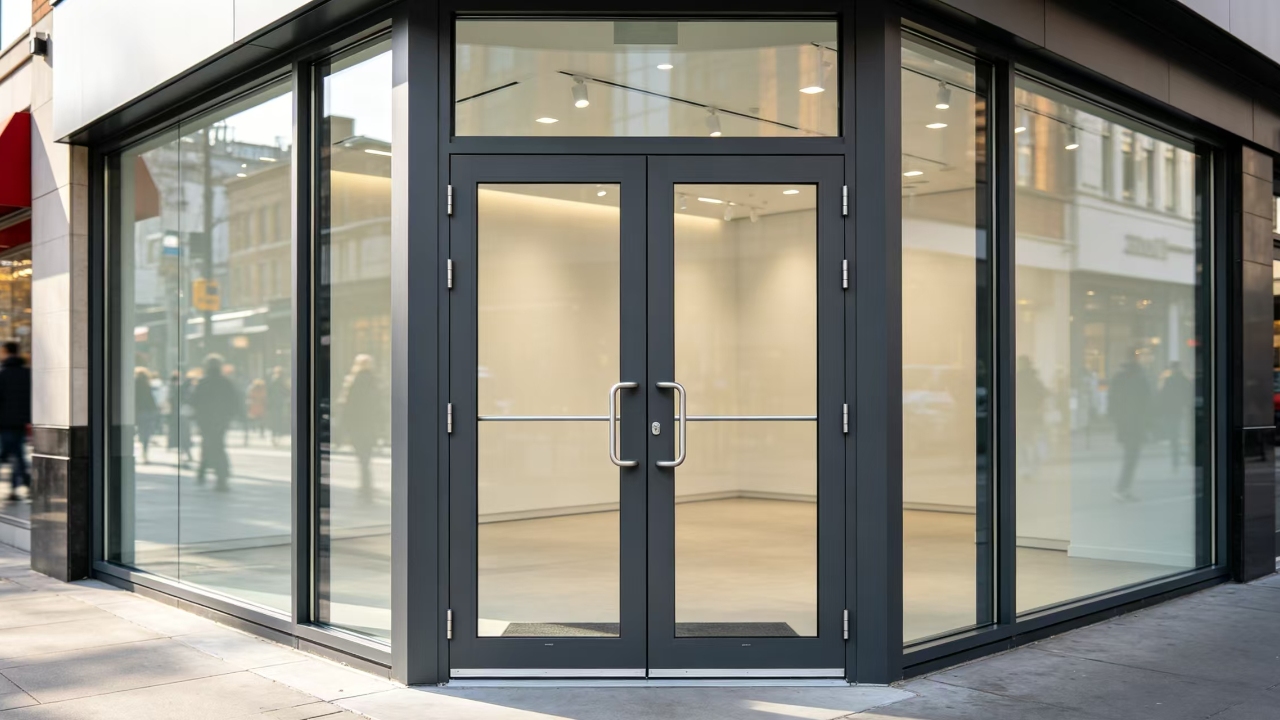
For retail stores, offices, restaurants, showrooms, and other commercial projects, the entrance needs to provide convenient access while also coordinating with the overall storefront design. An aluminum storefront door is usually installed as part of a complete storefront system. Large glass areas can improve visibility and natural light, while aluminum frames create a clean architectural appearance. For high-traffic commercial entrances, you should consider the door dimensions, surrounding framing, glass, hinges, locks, handles, and door closers as a complete system rather than evaluating the door alone. A well-designed storefront door system needs to balance accessibility, visibility, durability, security, and ease of maintenance.
6. Aluminum Patio Door
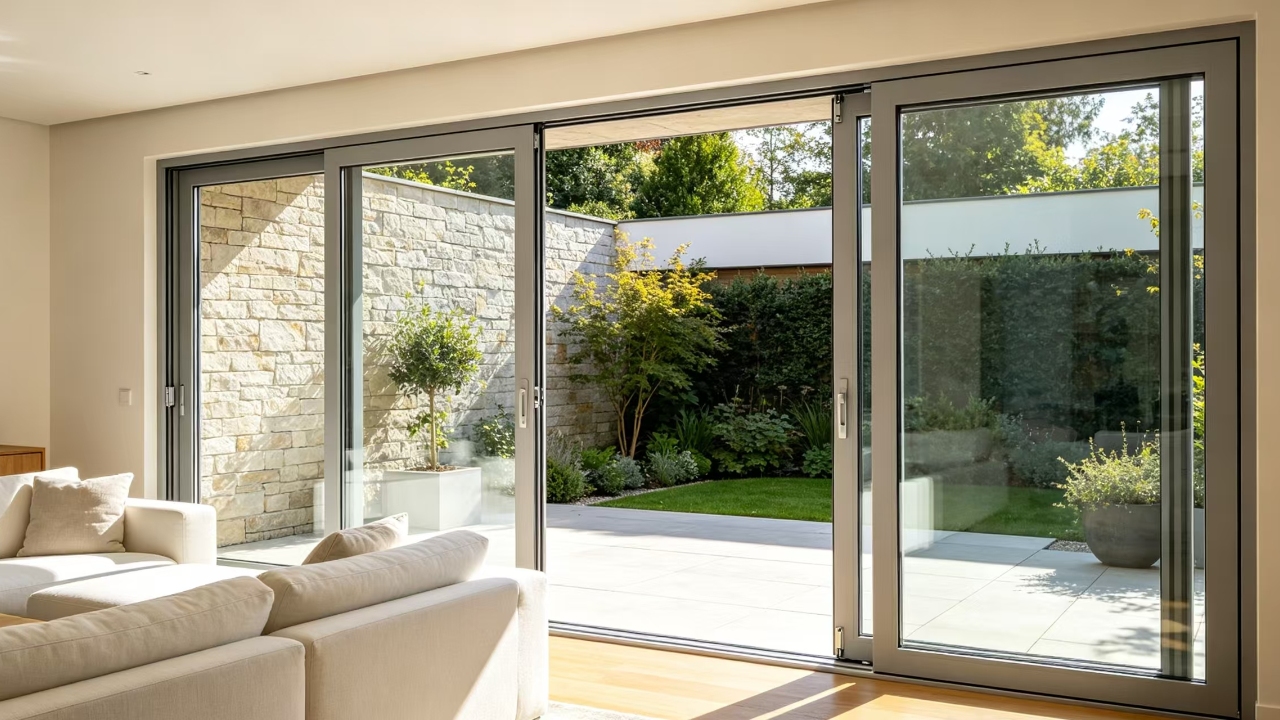
When a building needs to connect an interior space with a patio, terrace, balcony, or garden, the opening method and glass area can directly affect the user experience. An aluminum patio door can be configured with different opening methods according to the opening dimensions and available space. A sliding configuration is particularly suitable for projects that require a large glazed opening while also saving floor space. Large glass areas can bring more natural light and outdoor views, while different aluminum colors and finishes can complement the overall architectural design. For exterior applications, you should consider the frame, glass, seals, drainage structure, and installation method as a complete system because these details all affect weather resistance and long-term performance.
7. Aluminum Security Door
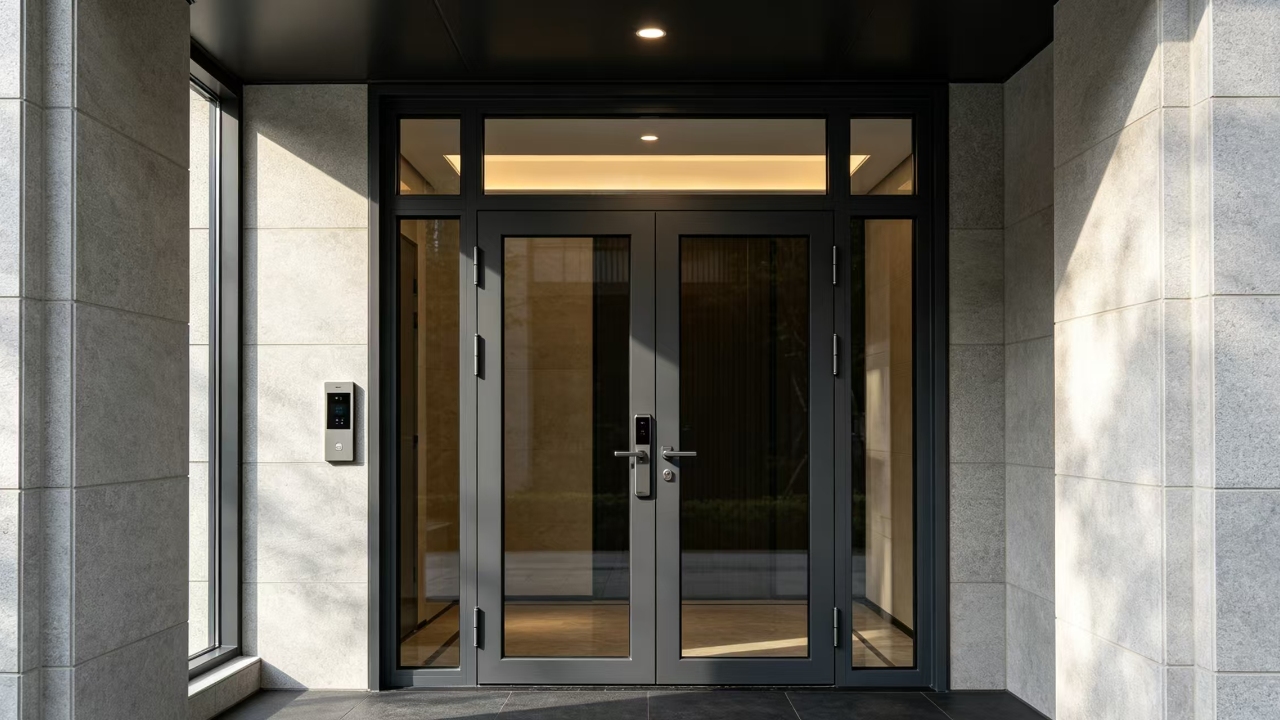
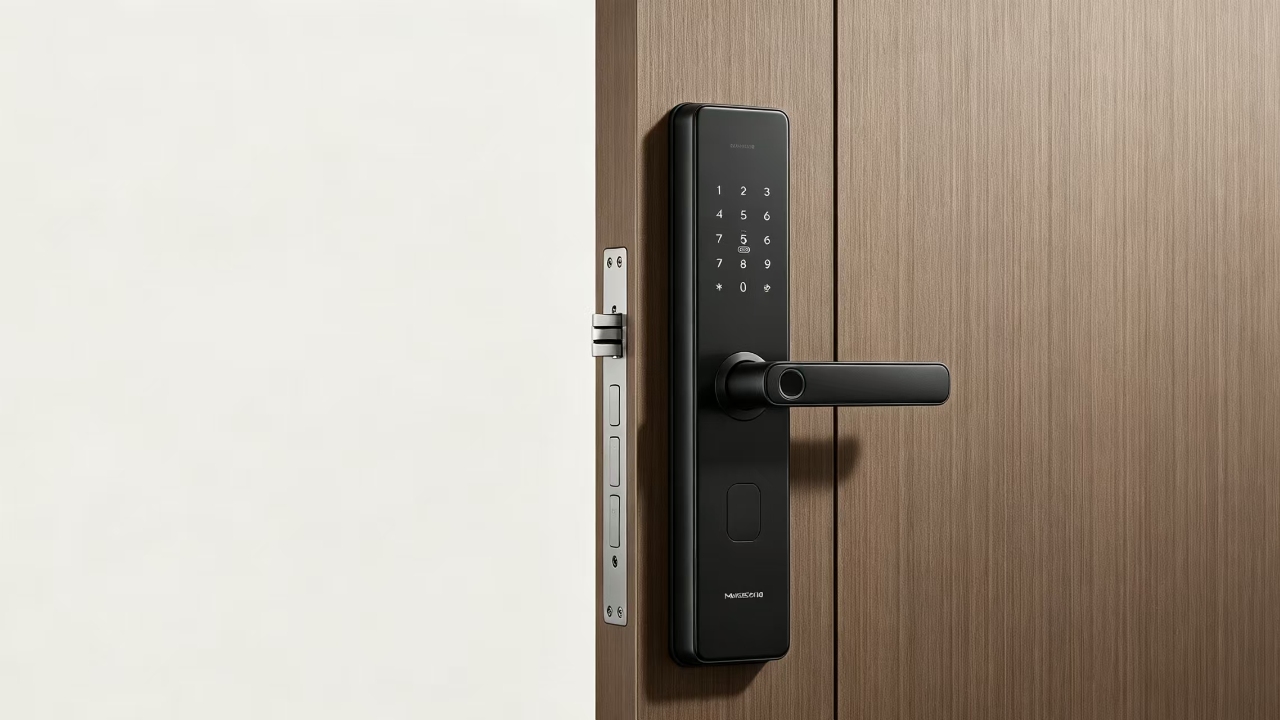
When your project has higher requirements for access control and security, performance should not be judged by the aluminum profile alone. The overall performance of an aluminum security door depends on the coordination of the frame, door leaf, locking points, cylinder, hinges, glass or panel, and fixing method. For commercial buildings, multi-unit projects, and areas that require controlled access, you may also need to consider compatibility with electronic access control systems. When comparing suppliers, instead of focusing only on aluminum thickness, you should evaluate the complete door construction and hardware configuration to ensure that security, durability, and everyday usability meet your actual project requirements.
How Should You Choose the Right Aluminum Door Type?
Once you understand the differences between aluminum door types, the next step is to match the door with your actual project conditions.
1. Start With the Opening
Start by checking the opening width and height before selecting the door configuration. A narrow opening may work well with a single swing door, while a wider opening may be better suited to a sliding, bifold, or double-door system. You should also consider the available clearance around the opening to make sure the selected door can operate without interfering with surrounding walls, furniture, equipment, or other access areas.
2. Consider Traffic and Frequency of Use
You also need to consider how often the door will be operated and who will use it, because a low-traffic interior opening and a busy commercial entrance can have very different hardware requirements. For high-traffic applications, pay closer attention to hinge and roller durability, lock and handle cycles, door closer performance, panel weight, and overall hardware load capacity. Matching these components to the expected usage frequency can help maintain smooth operation and reduce maintenance problems over time.
3. Match the Door With the Glass
Glass should be considered together with the aluminum frame and hardware because it can significantly affect the overall door weight and performance. If your project requires large glazed panels, you may need to choose between tempered glass, insulated glass, Low-E glass, laminated glass, sound-control glass, or different glass thicknesses based on the project’s safety, thermal, acoustic, and design requirements. Selecting the glass as part of the complete door configuration helps ensure that the frame, panels, rollers, hinges, and other hardware can properly support the final door weight.
4. Consider the Project Environment
The installation environment can also influence which aluminum door configuration and materials are appropriate. Exterior doors may be exposed to rain, humidity, strong sunlight, wind, or coastal conditions, so you should evaluate the aluminum finish, sealing system, drainage, hardware, and glass configuration as a complete solution. Depending on the project requirements, finishes such as anodizing, powder coating, or fluorocarbon coating can be considered to achieve the required appearance and durability for the application environment.
5. Look Beyond Standard Sizes
Not every construction project follows a standard opening size, so customized aluminum doors may be a better option when your project involves different opening dimensions, unusual panel proportions, specific colors, or special glass and hardware requirements. Before ordering, you can provide your supplier with door schedules, opening dimensions, required quantities, drawings, glass requirements, hardware specifications, color or finish requirements, and project performance requirements. With these details, the manufacturer can evaluate the actual project conditions and recommend a practical door configuration instead of simply quoting a standard product.
FAQ
How many panels can an aluminum bifold door have?
The number of panels depends on the opening width, individual panel size, folding direction, hardware system, and project requirements. A wider opening can be divided into multiple panels to create a larger clear opening when the door is folded. The manufacturer should evaluate the overall configuration to ensure that the panel dimensions and hardware system work together properly.
Can aluminum garage doors be automated?
Yes. Aluminum garage doors can be configured for manual or automatic operation depending on the door structure and project requirements. For automated systems, you should consider the door weight, opening dimensions, lifting mechanism, motor capacity, and expected usage frequency to ensure that the operating system is properly matched to the door.
What makes an aluminum security door different from a standard aluminum door?
The main difference is the level of security considered in the complete door system. An aluminum security door may incorporate stronger door construction, multi-point locking, reinforced hardware, security glass or panels, and compatibility with access control systems. The actual configuration should be selected according to the project’s security requirements rather than relying only on the thickness of the aluminum profile.
Can different aluminum door types use the same glass and hardware?
Not necessarily. Different door systems have different structural and hardware requirements. For example, sliding doors rely on tracks and rollers, while swing doors depend more heavily on hinges and door closers. Glass thickness and weight also need to be matched to the specific frame and hardware system.
How should aluminum doors be maintained after installation?
Routine maintenance is relatively straightforward. You should periodically clean the aluminum surfaces and glass, check moving hardware, inspect seals and drainage areas, and address any loose or damaged components promptly. For commercial projects with frequent use, regular hardware inspection can help identify potential problems before they affect daily operation.
Final Thoughts

At Verixor, we provide customized aluminum doors tailored to your project needs. With over 10 years of experience and a 10,000+ m² production facility, we offer flexible options for door types, sizes, glass, hardware, colors, and finishes. Simply send us your drawings or specifications, and our team can help turn your design into a practical, production-ready solution.
Contact us to discuss your aluminum door project and get a customized solution tailored to your requirements.